Sleep is not something you do. It is something that happens once you stop doing everything else — which is exactly why instructions to "clear your mind" or "just relax" tend to make the night worse.
Self-hypnosis works around that problem. Instead of ordering the mind to go quiet, it gives attention a slow, undemanding task and lets sleep arrive as a side effect. This page explains the mechanism, the structure of a session, and the honest limits.
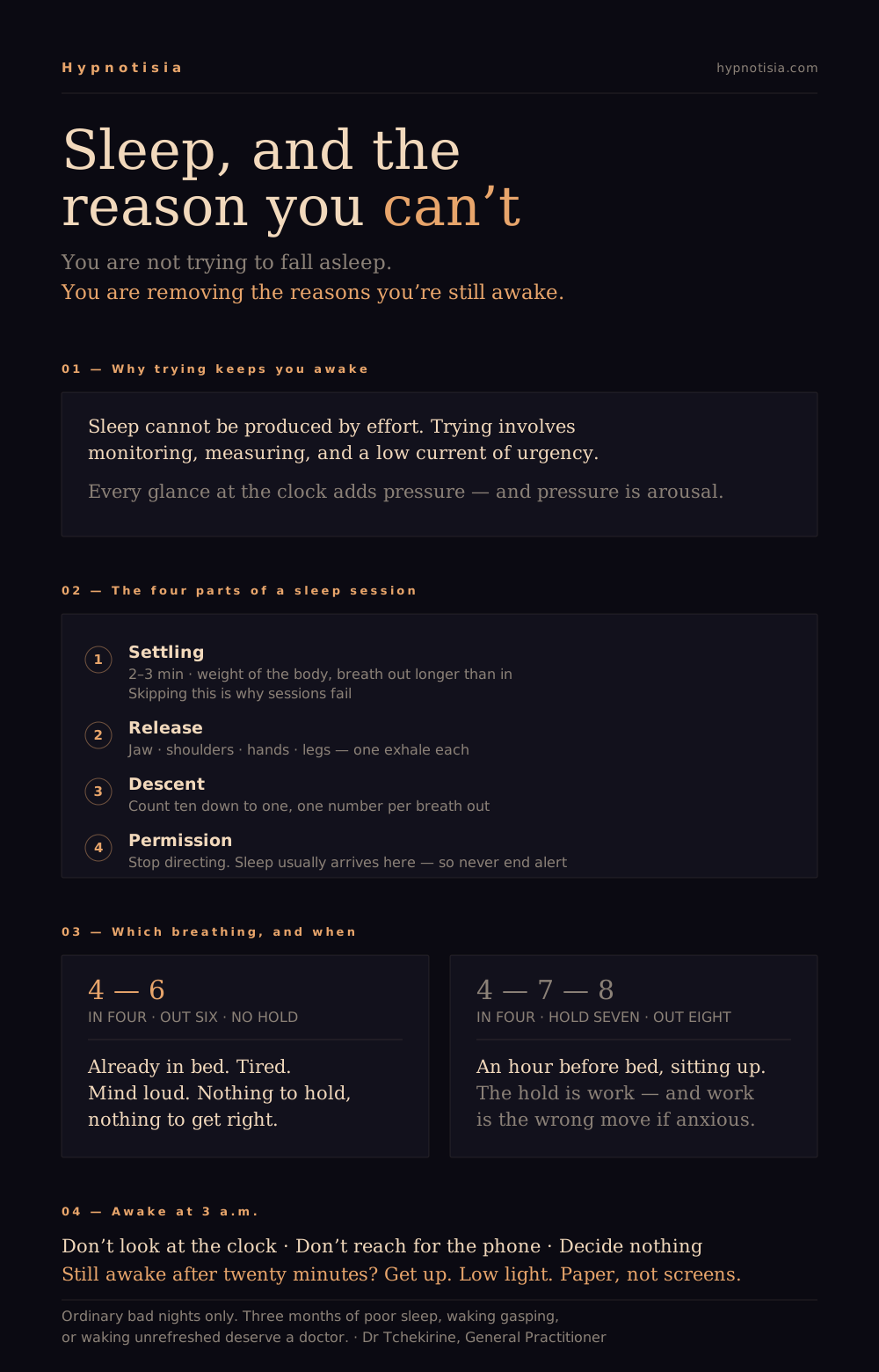
In this guide
What is actually happening
Hypnosis, stripped of the theatre, is a state of narrowed attention with reduced critical filtering. You already enter it several times a day: driving a familiar route and arriving without memory of the journey, losing an hour to a book, the drift just before sleep. Nothing is added to you during a session. Attention is simply pointed somewhere and held there.
For sleep, three things follow from that.
Physiological settling. A slow breath with a long exhale, a body released muscle by muscle, and a still position for several minutes all lower arousal. Your body is not deciding to sleep; it is being taken off alert.
Attention with somewhere to go. Counting down, following warmth through the hands, tracking the weight of the legs — none of it is interesting, and that is the entire point. Racing thoughts need an empty stage.
Suggestions that land more easily. In a settled, absorbed state, phrases like heavier, slower, further away tend to be taken at face value rather than argued with. This is not magic. It is what happens when the part of you that objects to everything has quietened down along with the rest.
You are not trying to fall asleep. You are removing the reasons you're still awake.
The four parts of a sleep session
Nearly every effective session, in any tradition, contains the same four movements in the same order.
- Settling. Two or three minutes of nothing demanding — the weight of the body on the bed, the breath finding a longer exit than entry. This is where arousal comes down; skipping it is why sessions fail.
- Release. Attention moves through the body letting go of one region at a time: jaw, shoulders, hands, legs. Physical release and mental release aren't separable; a clenched jaw keeps a mind switched on.
- Descent. A slow count downward, or an image of going down — stairs, a slope, sinking into the mattress. It gives attention a direction and a rhythm, and each step is one more thing that isn't your day.
- Permission. The session stops directing and starts allowing: nothing left to do, no need to finish, no requirement to stay awake for the end. This is where sleep usually arrives, which is why a session should never have a demanding conclusion.
If you drift off during part three, the session succeeded. It is not an exercise you are meant to complete.
Direct or indirect: which suits you
Two people can need opposite wording for the same result.
The direct approach instructs: your arms are heavy, your breathing is slowing, you are drifting down. It is efficient and works well for people who like clear steps.
The indirect, Ericksonian approach offers instead of instructs: you may notice one arm feels heavier than the other, and you don't have to decide which. It suits people whose first reaction to "your arms are heavy" is to check whether they really are — and to find that they aren't.
If direct suggestion has always felt like being lied to, that is information, not failure. Use the permissive version.
How long before it works
The physical part is immediate: most people notice slower breathing and heavier limbs inside the first two or three minutes of the first attempt.
Falling asleep faster is a skill, and skills take repetition. A reasonable expectation is one to two weeks of nightly practice before the sequence starts pulling you under on its own. What you are building is a route the body recognises — and recognition needs repetition, not effort.
Practising for a week and concluding it doesn't work is the most common way people abandon a method that would have worked in the third week.
When to stop practising and get help
Everything here addresses ordinary sleeplessness: a loud mind, a hard week, a body that won't come down. That covers most bad nights, and self-hypnosis is a genuinely good tool for it.
It is the wrong tool if you have had trouble sleeping most nights for three months or more, if you wake gasping or your partner reports that you stop breathing, if your legs will not stay still, if you sleep enough hours and still wake exhausted, or if low mood has come with the sleeplessness. Those have specific causes and specific treatments, and a breathing exercise will only delay finding out which one applies.
Seeing a doctor is not the failure case. It is the faster route.
Keep reading
Five articles in this guide, listed at the top of the page. If you are awake right now, start with the racing-mind piece; if the problem is the middle of the night, start with 3 a.m.
Common questions
Can self-hypnosis make you fall asleep instantly?
No, and anything promising that is selling something. It shortens the distance between lying down and letting go, usually by a growing margin over a couple of weeks of practice. Some nights it still won't work, and that is normal.
Is it safe to practise every night?
For a healthy adult using it for relaxation and sleep, yes — it is closer to a nightly routine than to a medication. The caution is not the frequency; it is using it as a substitute for investigating a sleep problem that has a medical cause.
What if I can't visualise anything?
Then use the other senses. Weight, warmth, and the rhythm of the breath are physical and require no mental images at all. A significant number of people don't see pictures when they close their eyes, and they practise successfully by feel.
Do I need a recording, or can I do it in my head?
Both work. A recording removes the effort of remembering the sequence, which matters when you are tired. Doing it silently gives you a version you can use anywhere, including in the middle of the night without reaching for a device.